
You have just had composite bonding and your new smile looks great. Now comes the practical part: what can you actually eat? Can you have your morning coffee? Is it safe to bite into an apple?
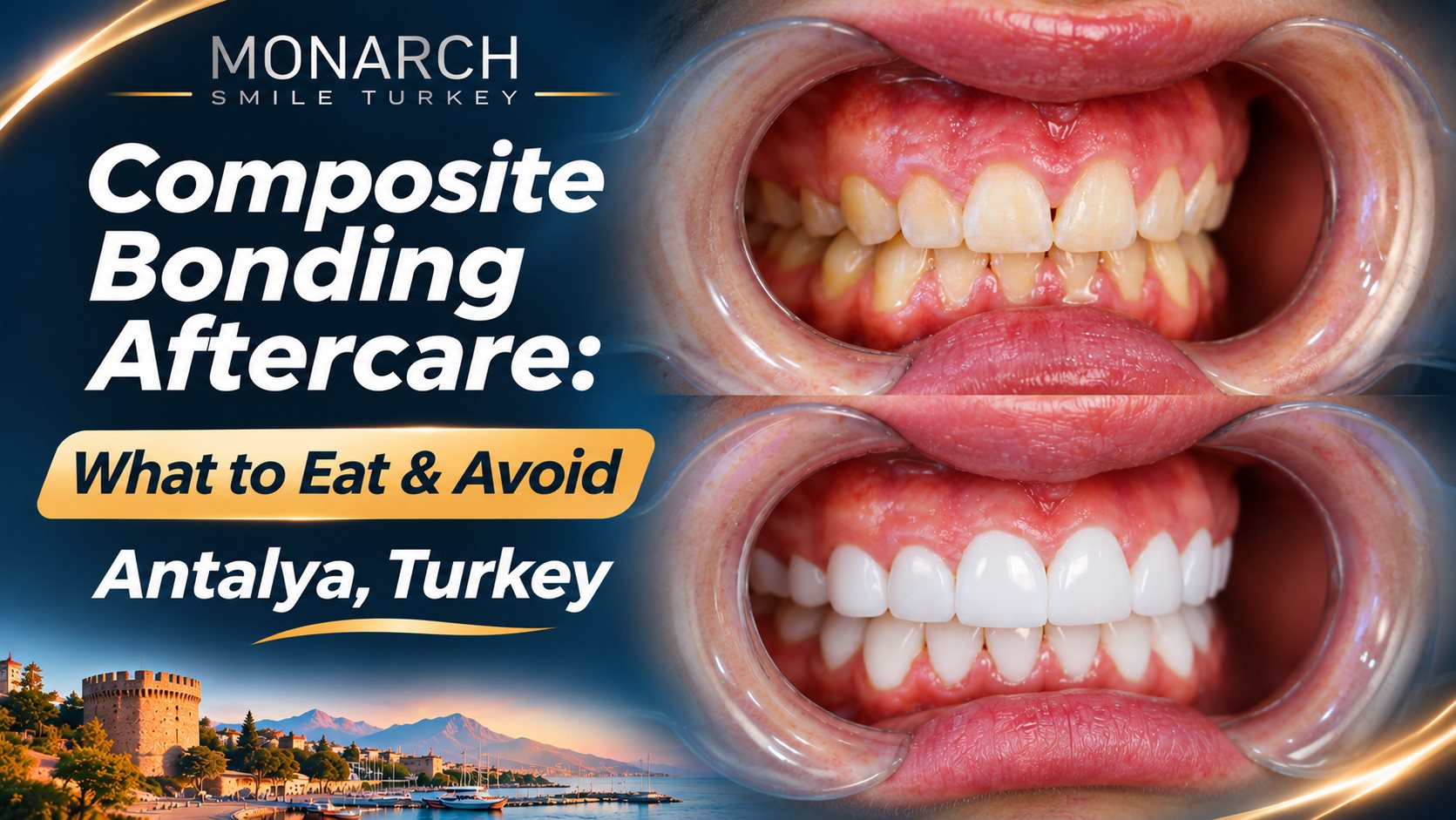
The good news is that composite bonding does not come with a long list of strict rules. Unlike some dental treatments, there is no long healing period, and most people go back to eating normally on the same day. Still, the choices you make in the first couple of days, and the habits you keep afterwards, have a real effect on how long your bonding stays bright, smooth and chip-free. If you are new to the treatment, our guide on what composite bonding is covers the basics.
In this guide, our team at Monarch Smile Turkey in Antalya explains what you can eat after composite bonding, what is best avoided and how to protect your results once you are back home.
Can You Eat Straight After Composite Bonding?
Yes. The composite resin is hardened with a curing light during your appointment, so it is set by the time you leave the clinic. There is no need to wait hours before eating, as you might after some other procedures.
If you had local anaesthetic, which is not always needed for bonding, wait until the numbness has completely worn off. Eating while your lips or tongue are still numb makes it easy to bite yourself without noticing.
Why the First 48 Hours Matter
The composite is hardened during treatment, so there is no additional setting period before you can eat. Your teeth may feel a little different while you get used to their new shape. Advice about avoiding staining foods and drinks during the first day or two can vary depending on the material used and your dentist's instructions.
Your dentist may recommend a "white diet" for the first 48 hours as a precaution to limit staining. This means choosing light-coloured foods and drinks. Follow the aftercare instructions given for your treatment.
What to Eat After Composite Bonding
In the first couple of days, these are safe and comfortable options:
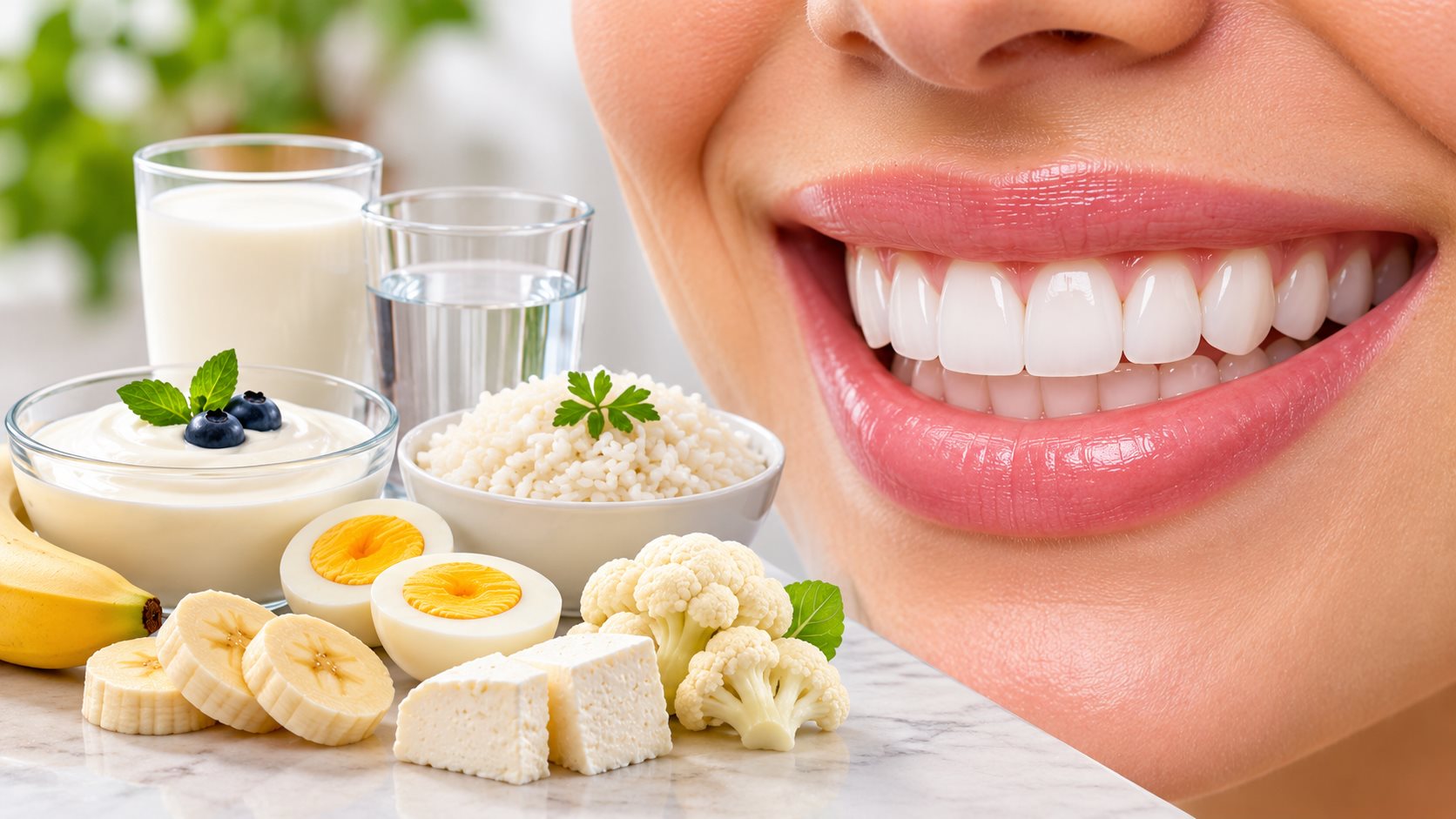
- Plain yoghurt, milk and light cheeses
- Chicken, turkey and white fish
- Rice, pasta and potatoes without coloured sauces
- White bread
- Eggs
- Bananas, peeled pears and other pale fruit
- Cauliflower, mushrooms and peeled cucumber
- Porridge or oats made with milk
- Water and still mineral water
Softer foods are also a good idea while you get used to the feel of your bonded teeth. If something feels uncomfortable to bite, cut it into smaller pieces and chew with your back teeth.
Foods and Drinks to Avoid After Composite Bonding
The things to watch out for fall into two groups: foods that stain and foods that can chip or break the composite.
Foods and Drinks That Can Stain
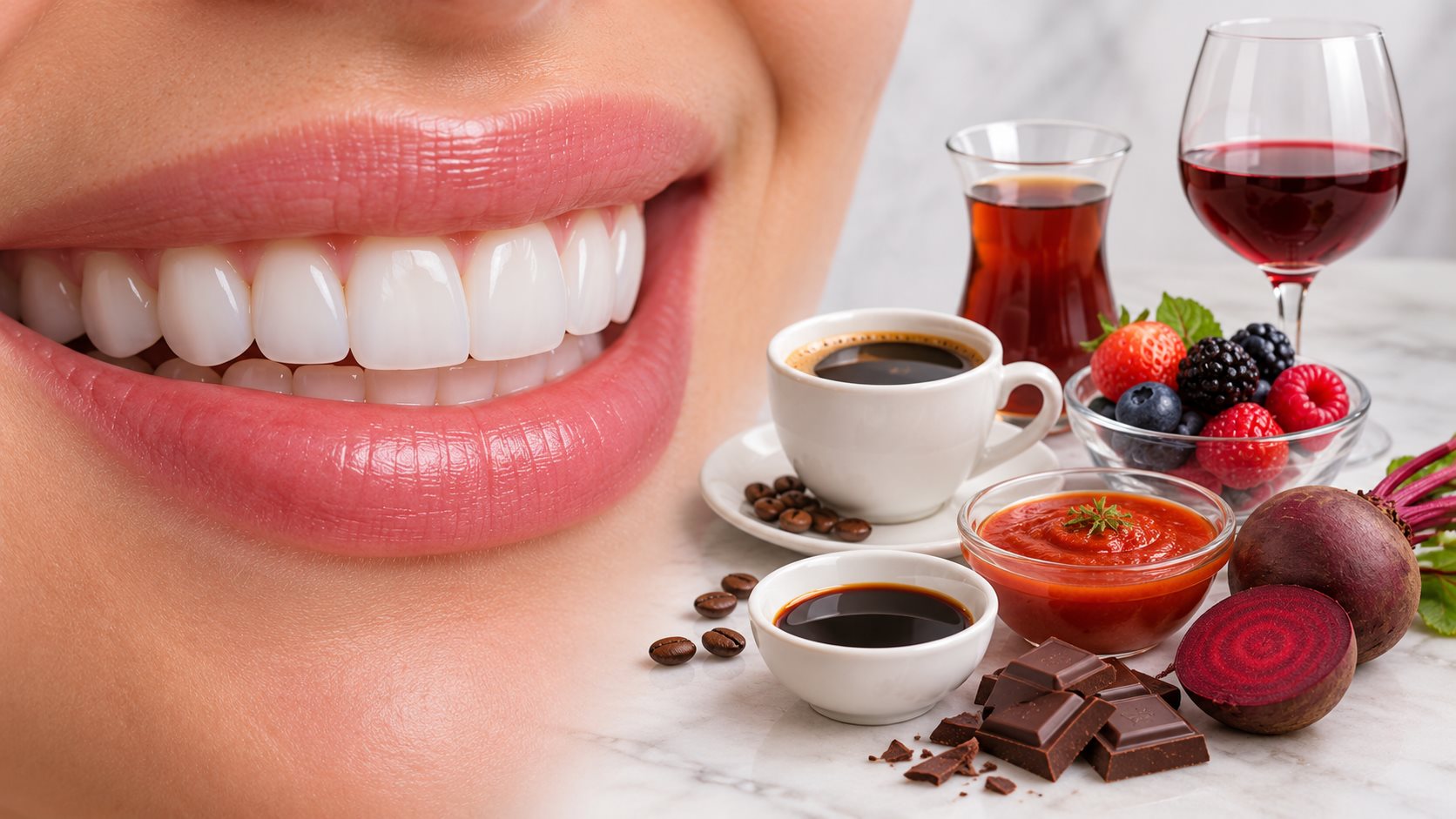
- Coffee and black tea
- Red wine and rosé
- Cola and other dark fizzy drinks
- Fruit juices such as grape, cranberry and pomegranate
- Berries like blueberries, blackberries and cherries
- Tomato sauce, ketchup and red pasta sauces
- Soy sauce, balsamic vinegar and curry
- Beetroot
- Dark chocolate
It is especially important to limit these during the first 48 hours. After that, you can enjoy them in moderation. Just remember that composite does not respond to teeth whitening, so stains that build up on the resin usually need to be polished off by your dentist. Read more in our guide on whether you can whiten composite bonding.
Foods That Can Chip or Damage Bonding
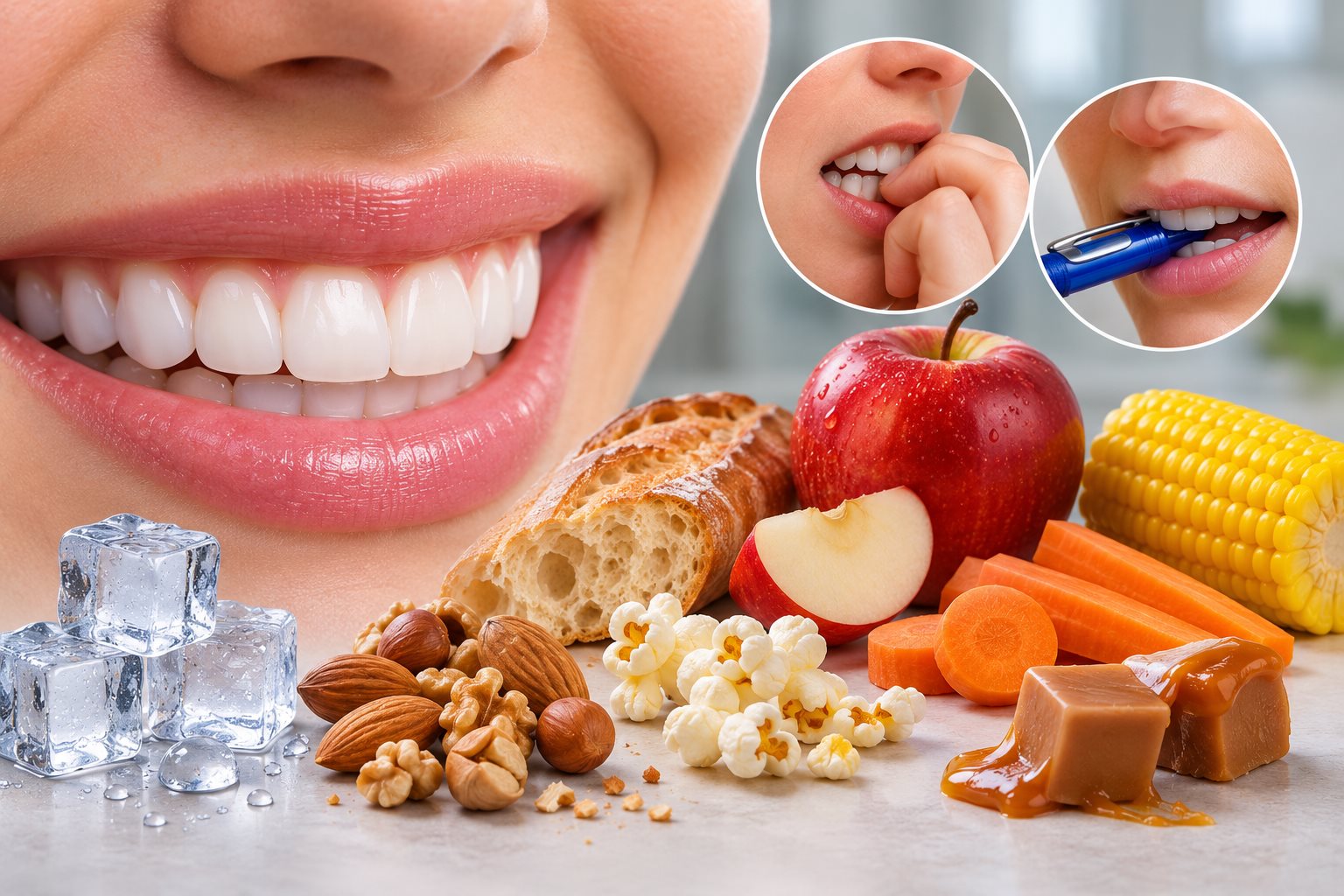
- Ice cubes
- Hard sweets and boiled lollies
- Nuts, especially whole almonds and hazelnuts
- Popcorn kernels
- Crusty bread and baguette ends
- Bones and meat on the bone
- Toffee, caramel and other sticky sweets
- Whole apples, carrots and corn on the cob eaten straight off
Avoid chewing ice, bones, hard sweets and unpopped popcorn kernels, as these can chip both bonding and natural teeth. Foods such as apples and carrots can still be enjoyed: slice them into thin pieces, take corn off the cob and avoid biting hard foods directly with your bonded front teeth. Composite is strong, but it is not as tough as natural enamel; our article on the advantages and disadvantages of composite bonding explains why.
Can You Drink Coffee After Composite Bonding?
This is one of the questions we hear most often. It is best to skip coffee for the first 48 hours if you can. After that, you can go back to drinking it, but a few small changes will help protect your bonding:
- Drink it through a straw when possible, so it touches your front teeth less.
- Rinse your mouth with water straight after your cup.
- Avoid sipping slowly over several hours.
- Adding milk can help reduce its staining effect slightly.
The same advice applies to tea, red wine and dark fizzy drinks.
What About Smoking?
Smoking is one of the fastest ways to discolour composite bonding. Nicotine and tar leave yellow and brown marks on the resin that are hard to remove at home. It also affects gum health, which matters for the area where the bonding meets your natural tooth. If you smoke, try to avoid it completely for at least the first 48 hours, and ideally cut back for the long term.
Daily Aftercare Tips for Composite Bonding
Food is only one part of aftercare. These daily habits make a big difference too:
- Brush twice a day with a soft toothbrush.
- Use a low-abrasion fluoride toothpaste. Whitening and charcoal toothpastes can scratch the surface of the composite and make it dull.
- Clean between your teeth every day with floss or interdental brushes.
- Use an alcohol-free mouthwash, as alcohol can soften the resin over time.
- Do not bite your nails, chew pens or open packets with your teeth.
- Wear a night guard if you grind or clench your teeth.
- Wear a mouth guard if you play contact sports.
Habits like grinding and nail biting put far more stress on bonded edges than most foods do, so it is worth paying attention to them. You can read more in our article Does composite bonding damage your teeth?
Long-Term Care: Keeping Your Bonding Looking New
After the first few days, composite bonding does not need much special care. Treat it like your natural teeth, with a little extra caution around very hard and very dark foods.
Regular dental check-ups are important. Your dentist can polish the composite to bring back its shine, remove surface stains and check that the edges are still smooth and sealed. Small chips can usually be repaired quickly without replacing the whole restoration.
With good habits and regular maintenance, your bonding can stay looking fresh for years. Find out more in our guide on how long composite bonding lasts.
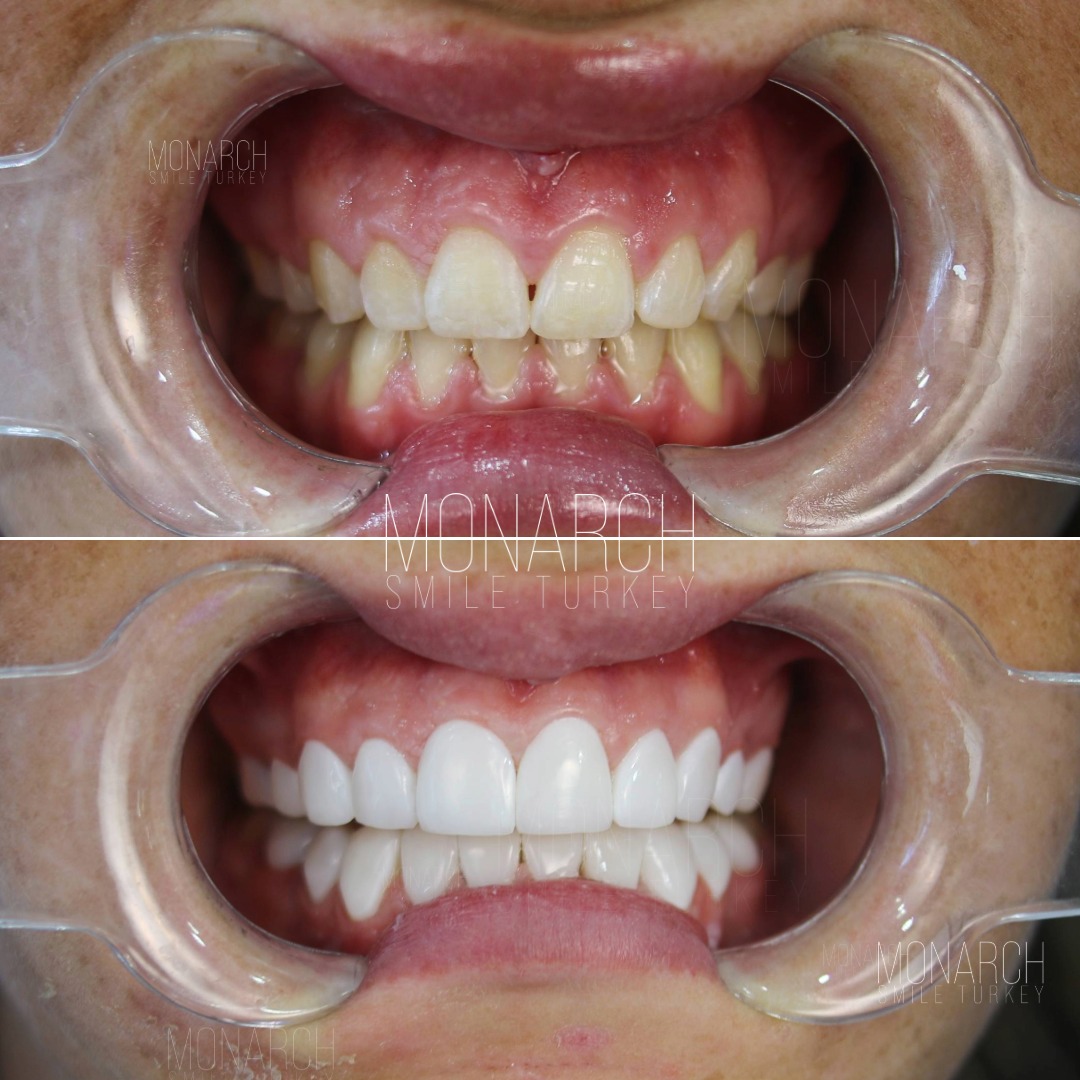
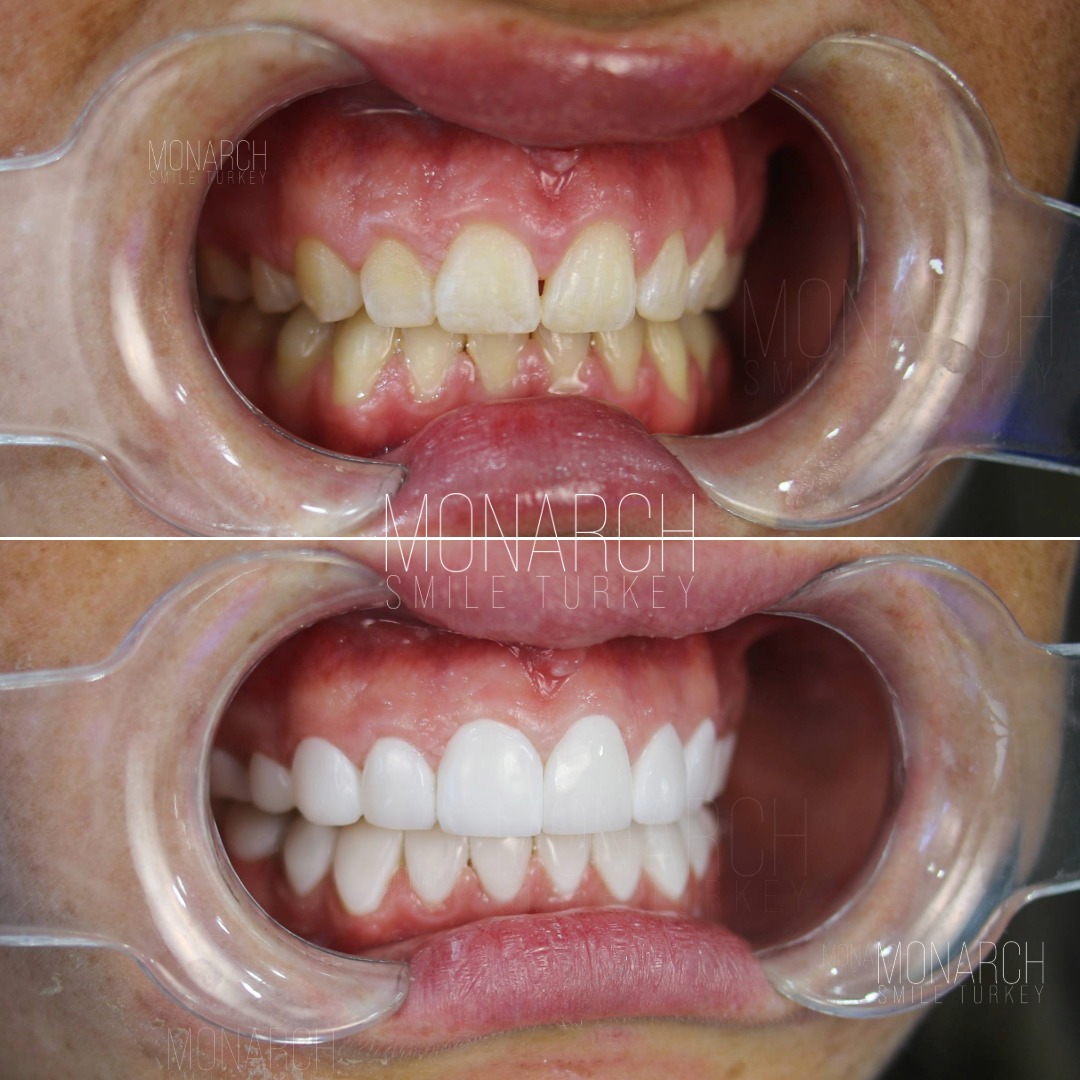


A brighter smile worth protecting.
Before and after composite bonding results from our Antalya clinic. With a light-coloured diet in the first 48 hours, good daily habits and regular polishing, results like these can stay bright and smooth for years.
When Should You Contact Your Dentist?
Get in touch with your dentist if you notice:
- A chip, crack or rough edge on the bonding
- A sharp area that catches your tongue or lip
- Your bite feeling uneven or "high" when you close your teeth
- Sensitivity that lasts more than a few days
- Staining that does not improve with normal brushing
If you had treatment with us in Antalya and are now back home, our team is happy to help with any questions about your bonding, wherever you are.
Frequently Asked Questions
How Long After Composite Bonding Can I Eat?
You can eat as soon as you leave the clinic, as the composite is hardened during treatment. If you had anaesthetic, wait until the numbness wears off.
How Long Should I Avoid Coffee After Composite Bonding?
Ideally for the first 48 hours. After that, you can drink coffee in moderation and rinse with water afterwards.
Can I Drink Alcohol After Composite Bonding?
The colour of an alcoholic drink does not determine whether it is suitable after treatment. Red wine can stain bonding, and acidic drinks can affect your natural teeth. Follow your dentist's instructions and avoid alcohol if you have been advised to do so after sedation or because of medicines you are taking.
Can I Eat Hard Food With Composite Bonding?
Yes, but cut hard foods into small pieces and avoid biting them with your bonded front teeth.
Does Composite Bonding Stain Easily?
Composite can pick up stains from coffee, tea, red wine and smoking over time. Limiting these and having regular professional polishing keeps it looking bright.
Can I Use Whitening Toothpaste on Composite Bonding?
It is better not to. Whitening toothpastes are often abrasive and can dull the surface of the composite without changing its colour.
Final Thoughts
Composite bonding aftercare is simple. Stick to light-coloured foods for the first 48 hours, be careful with very hard and sticky foods, keep staining drinks in check and look after your teeth with good daily habits. Small choices like these help your new smile stay bright and healthy for much longer. If you are still deciding where to have treatment, read is it worth going to Turkey for composite bonding?
If you are considering composite bonding in Antalya, Turkey, or have questions about caring for your treatment, contact Monarch Smile Turkey. Our team will guide you before, during and after your treatment so you can enjoy your smile with confidence - contact us for a free consultation.
By Dt. Ebru Yüceer · Updated