
What is a dental crown?
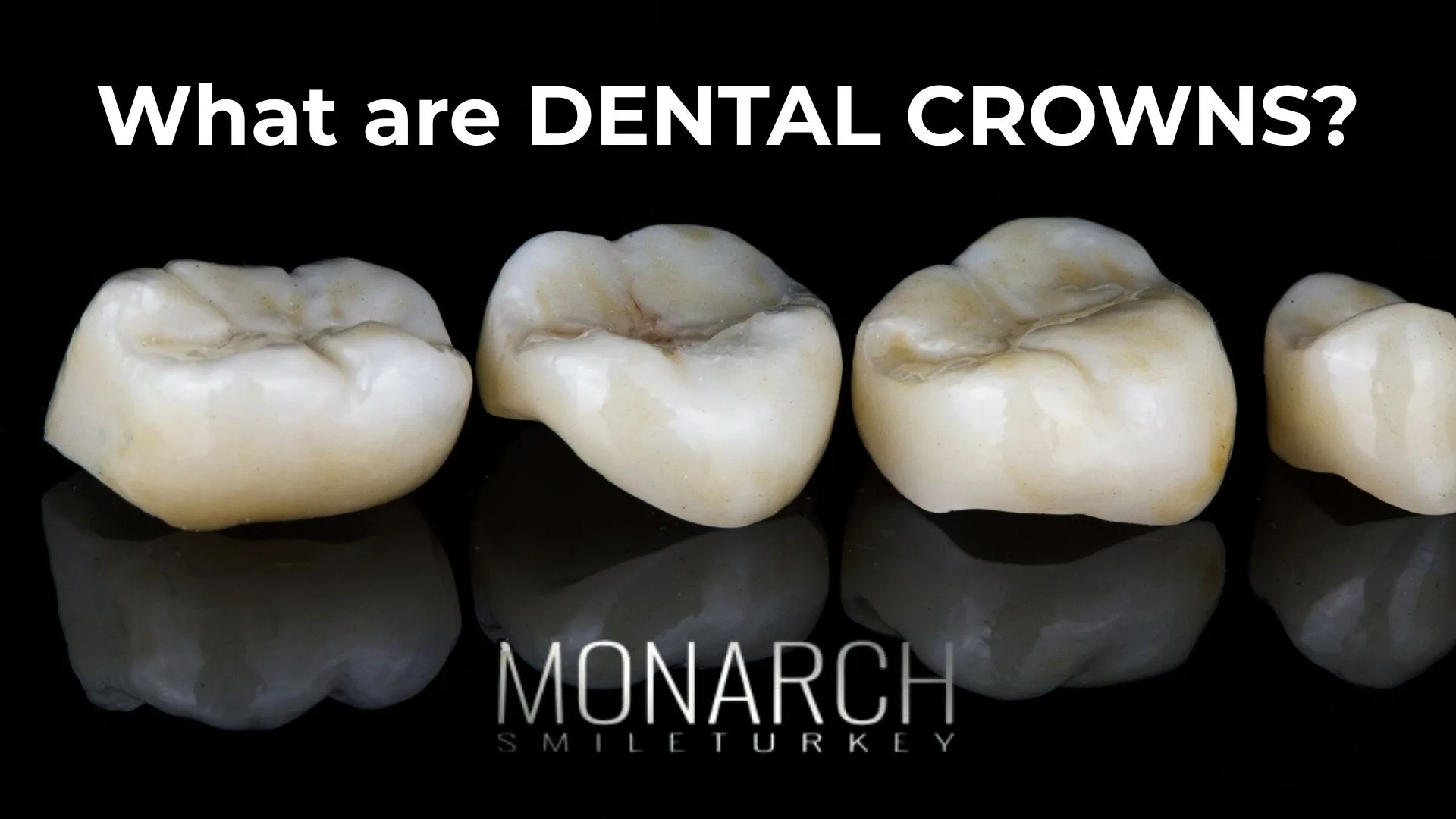
A dental crown is a cover that goes over a tooth when that tooth isn’t strong enough on its own anymore. It wraps around it and protects it.
We use crowns when a tooth is broken, very worn down or has had a root canal and feels fragile. Instead of removing the tooth, we strengthen it. Once it’s placed, you chew on it like a normal tooth.
Types of dental crowns
At the end of the day, it comes down to one thing: what that tooth actually needs.
Not every crown is the same. Some are made to look perfect, some are made to handle heavy chewing, and some try to do both.
According to materials;
Zirconia crowns
Zirconia crowns are strong. That’s why we use them a lot for back teeth. But newer zirconia looks much better now, so we also use it in visible areas.
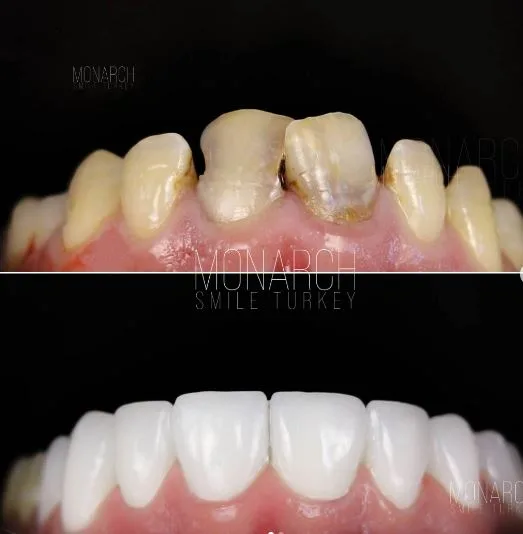
Zirconium Crown Before and After in Turkey, Antalya
Please click here to see Zirconium Crown before and after photos and videos in Turkey, Antalya
E-max (lithium disilicate)
E-max is all about aesthetics. It reflects light like natural enamel, so it blends in well, especially for front teeth. Not the first choice if someone grinds heavily, though.
Porcelain fused to metal (PFM)
A mix of strength and looks. The metal gives support; the porcelain gives the colour. But over time, you might see a dark line near the gum.
Metal crowns (gold or alloys)
Not pretty, but extremely durable. Some dentists still consider them one of the most reliable options for long-term use.
If you ask what dentists actually use most today, it’s usually zirconia and lithium disilicate.
A clinical review shows that both zirconia and lithium disilicate crowns have high survival rates and are widely used in modern prosthetic dentistry.
What is cubic zirconia?
Cubic zirconia is a ceramic material used to make strong and aesthetic dental crowns. It is not metal, but it is tough enough to handle chewing forces.
In simple terms, it gives you a crown that does not easily break and still looks like a natural tooth. That is why it is used in both front and back teeth today.
Studies show zirconia has high fracture resistance and good long-term success in clinical use.
What is a tooth cap?
A tooth cap is just another way of saying a dental crown.
It covers the whole tooth, like a small protective shell. We use it when a tooth is no longer strong enough on its own; maybe it’s broken, heavily filled, or had a root canal. Instead of risking it cracking later, we support it.
Advantages and Disadvantages of Dental Crowns
A crown is usually what we choose when a tooth is still there… but not strong enough anymore. So instead of losing it, we protect it.
Advantages of Dental Crowns
The biggest advantage is protection. A weak or cracked tooth becomes usable again. You can chew normally without worrying, 'Will this break now?’
It also restores shape. Sometimes teeth wear down, break, or just look… off. A crown brings it back to normal. Function and appearance together.
And honestly, crowns are quite reliable. With good care, they can last many years. That’s not just clinical talk; we see it every day.
There’s also strong evidence behind this. Teeth that are structurally weak, especially after root canal treatment, survive much longer when covered with a crown instead of being left as they are.
Disadvantages of Dental Crowns
Now, the part people don’t always love.
To place a crown, we have to shape the tooth. That means removing a small amount of natural tooth structure. It’s controlled, but still, it’s permanent.
There can also be some sensitivity afterwards. Usually temporary, but patients do notice it sometimes.
And yes, crowns are not forever. They last long, but not a lifetime. At some point, they may need to be replaced.
Cost is another factor. It depends on the material and clinic, but it’s more than a simple filling.
So really, a crown is not the ‘first option'. It’s the right option when a tooth needs more support than anything else can give.
Dental crown cost in Turkey
Dental crown prices in Turkey are generally quite affordable compared to many countries, but they still vary depending on what you choose.
On average, you’ll see something like:
Metal-supported crowns → around €100 – €150
Zirconia crowns → around €150 – €250
E-max crowns → around €200 – €300
Now honestly, the exact price is never just about the crown itself. It depends on the material you choose, how many teeth are involved, the clinic and lab quality, the dentist’s experience, and whether you need extra procedures like root canal treatment or a build-up before the crown.
So, if you’re trying to get a real, case-specific number, the best thing is to have it evaluated properly.
For a detailed analysis and exact pricing, contact Monarchsmileturkey.
Preparing a tooth for a crown
This part sounds a bit intimidating at first, but honestly, it’s more straightforward than people expect.
We gently shape the tooth so the crown can sit on it properly. Not too much, just enough to make space. Then we take a scan or impression, and that goes to the lab. While your final crown is being made, you usually wear a temporary one.
The key here is precision. If the crown fits well, everything feels natural. If it doesn’t, you’ll feel it. So, we take our time at this step. It’s not just "preparing a tooth"; it’s setting everything up for the crown to work long-term.
Dental Crowns for Front Teeth
Front teeth are a different story. Here, it’s not just about strength; it’s about how it looks when you smile, talk, laugh… all of it.
So, we usually go for materials that mimic natural enamel. E-max or aesthetic zirconia are common choices. They reflect light in a similar way to real teeth, which is why they don’t look fake when done right.
And honestly, a good front crown should be invisible. Not literally, of course, but it shouldn’t stand out. If someone notices it right away, something’s off. Colour, shape, or how it catches light.
This is where experience matters more than anything else.
How long does a teeth crown last?
Most crowns last somewhere between 10 and 15 years. Sometimes longer.
But this is not just about the crown itself. It’s about how you use it. If you grind your teeth, bite hard things, or don’t keep up with oral care, it won’t last as long. In a study, the cumulative survival rate was 89.9% and 80.9% after 5 and 10 years and 70.5% and 61.8% after 15 and 20 years, respectively.
I usually tell patients this: treat it like your natural tooth, maybe even a bit more carefully. Because once it’s damaged, you’re not repairing it, you’re replacing it.
Are crowns better than veneers?
No.
They’re not better or worse; they’re just different.
A crown covers the whole tooth. We use it when the tooth is weak, broken, or heavily restored. It’s about protection.
A veneer only covers the front surface. That’s more about appearance. Small shape corrections, colour improvements, things like that.
So, the real question isn’t ‘which is better?’
It’s ‘what does this tooth actually need?’
That’s how we decide.
Frequently Asked Questions
How much tooth is needed for a crown?
You don’t need a perfect tooth, but you do need enough healthy structure to hold the crown.
If a big part of the tooth is missing, we usually rebuild it first with a core. So even a badly damaged tooth can often still get a crown, as long as the root is solid.
How much does a crown cost?
It depends on many factors like the material and the clinic.
In Turkey, it’s usually somewhere between €100 and €265 per tooth. Zirconia and E-max are on the higher side because they look better and require more precise work.
Is a dental crown painful?
The procedure is done under local anaesthesia, so you don’t feel pain during it. Afterward, there might be a bit of sensitivity for a few days, but it’s usually mild and temporary.
Are crowns permanent?
They are long-lasting, but not permanent. With good care, they can last many years, but at some point, they may need to be replaced.
Note
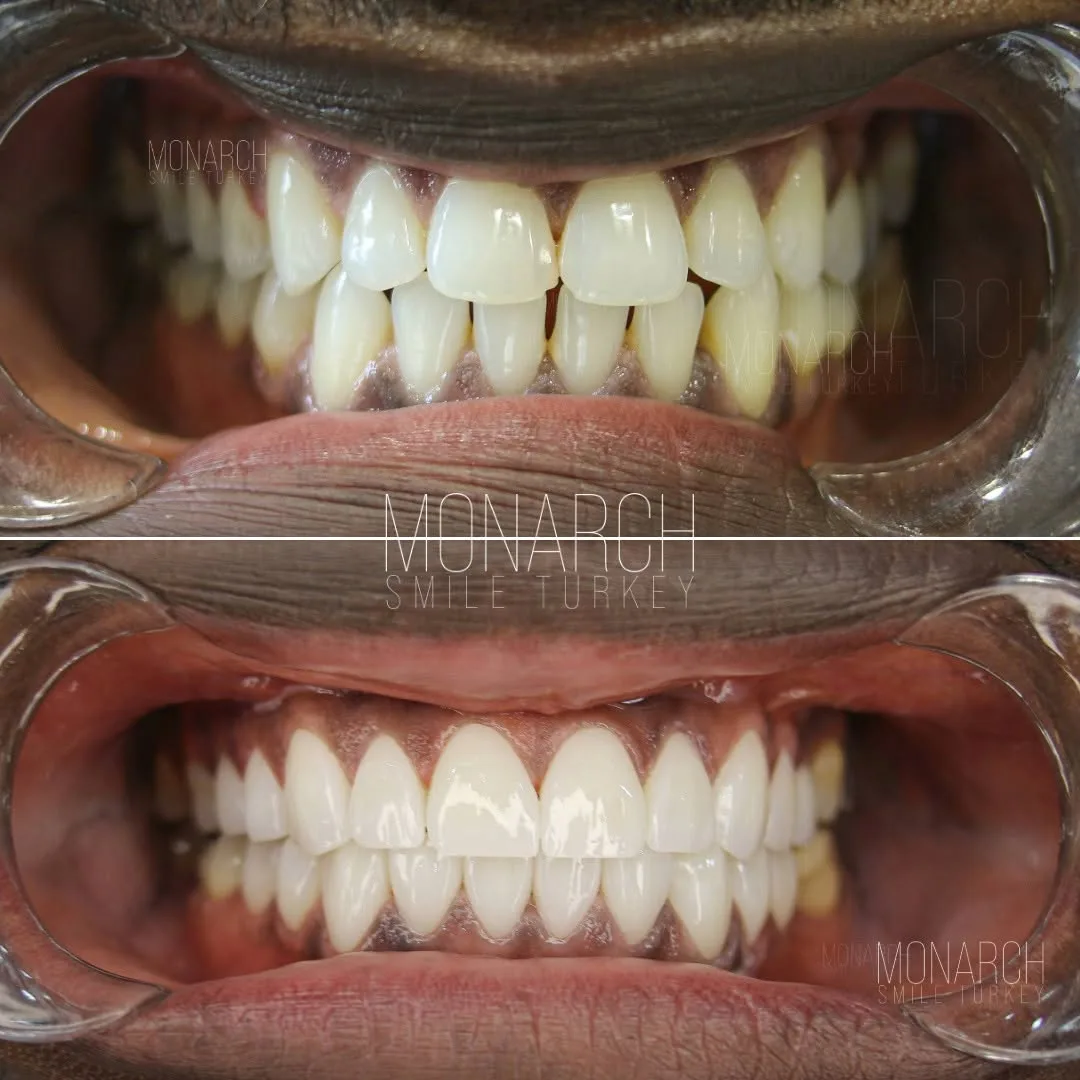
- Before and after images were taken in the same clinical environment and under the same technical conditions.
- Written and explicit patient consent has been obtained.
- This content is shared for informational purposes only.
- Results may vary from person to person.
For more detailed information, please contact us or visit us at our dental clinic.