
What is a Dental Crown?
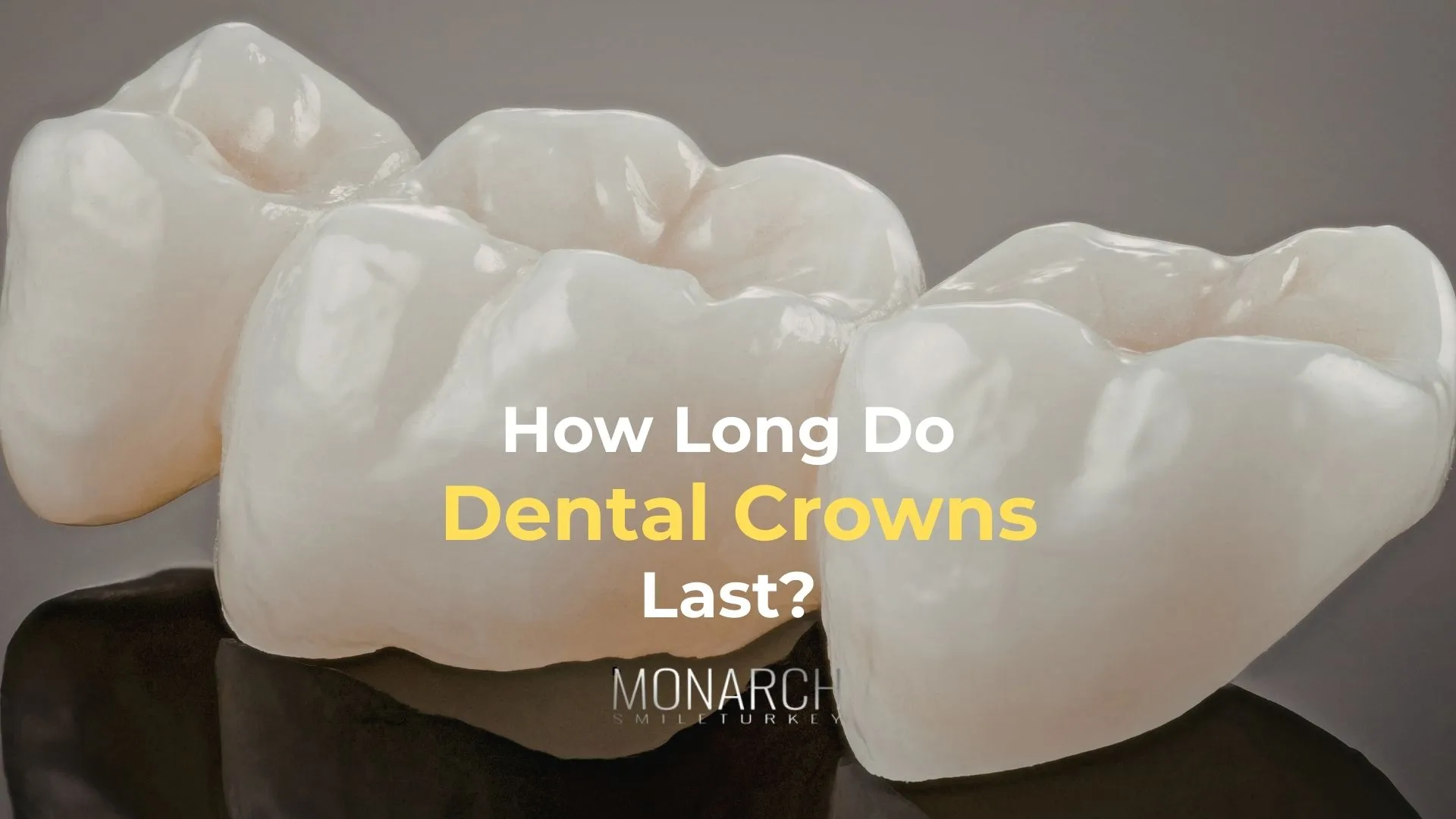
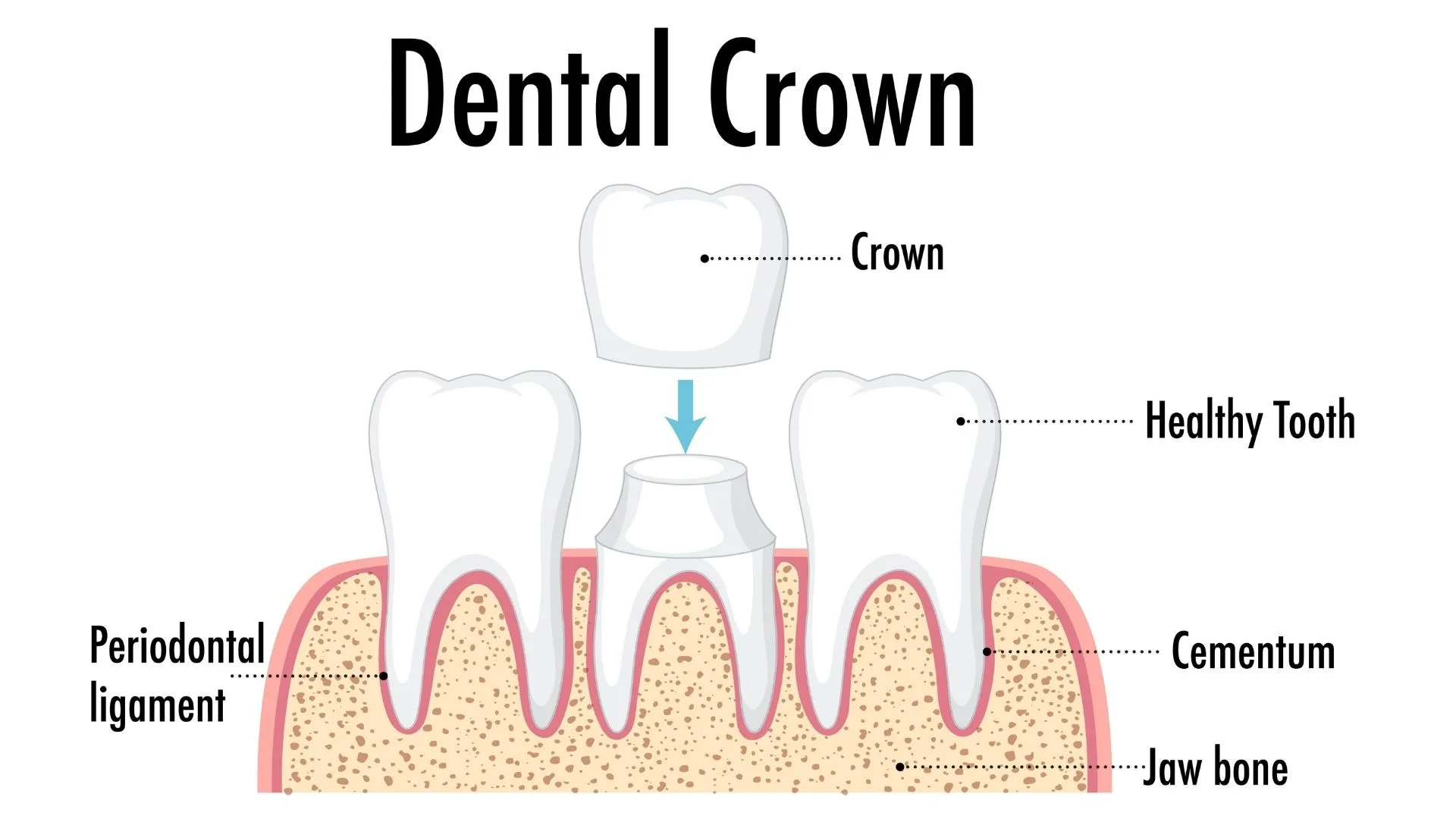
Dental crown is a specially prepared ‘cap’ or ‘cover’ that completely or partially covers a damaged, weakened, or cosmetically unsatisfactory tooth. It is called a crown because it completely covers the visible part of the tooth (the crown).
What is The Purpose of a Crown?
Protecting and strengthening a weakened tooth
After root canal treatment:
Root canal treatment is a procedure in which the nerves and blood vessels inside the tooth are removed. This procedure saves the tooth but makes it more fragile and prone to cracking. A crown wraps around this weakened tooth like armor against external forces, preventing it from breaking in the long term and extending its life.
Large cavities or fillings:
If a large portion of the tooth is lost due to decay or if there is a very large filling, the remaining tooth structure is weak. A crown holds the entire tooth together, providing support against chewing forces.
Repairing a broken or worn tooth
Broken teeth:
A large fracture compromises the integrity of the tooth and causes sensitivity. A crown restores the tooth's original shape and function by bonding the broken pieces together.
Worn teeth:
Teeth that are excessively worn due to teeth grinding (bruxism) or acid erosion (e.g., from acidic drinks) lose their height and function. A crown compensates for this wear, restoring the tooth's length and chewing efficiency.
Restoring a tooth with a large filling or decay
When the decay or filling in a tooth is very large, a filling may not be sufficient. The filling may fall out or fail to protect the tooth adequately. In such cases, a crown that covers the entire tooth offers a safer and more permanent solution.
Improving cosmetic appearance
Crowns are also frequently used for aesthetic purposes. They are an excellent cosmetic solution in the following situations:
Misaligned teeth:
Corrects congenital or acquired misalignments.
Discoloration:
Masks severe staining that cannot be corrected by methods such as bleaching.
Undesirable gaps:
If there are undesirable gaps (diastema) between the teeth, these gaps can be closed by adjusting the size of the crowns.
Supporting the dental bridge:
‘Bridge’ prostheses, which replace one or more missing teeth, are fixed by attaching them to the adjacent healthy teeth. These supporting teeth gain the strength and shape to carry the bridge thanks to the crowns placed over them.
Creating the superstructure of a dental implant
An implant (screw) placed in the jawbone to replace a missing tooth does not function on its own. The crown is the structure made on top of this implant that is visible in the mouth and functions like a natural tooth.
Materials Used in Dental Crown Fabrication:
Different materials are selected depending on the purpose and location of the crown:
All-ceramic/porcelain: Provides the most natural and aesthetic appearance. Ideal for front teeth. (e.g., Zirconium) Metal-ceramic (PFM): Porcelain is fused onto a strong metal substructure. Both durable and aesthetic. Often preferred for back teeth.
Full metal (gold alloy or stainless steel): The most durable option. Highly resistant to wear and breakage. However, due to its metallic appearance, it is generally used for back molars.
Resin: A more economical option, but less durable than others and may wear or discolor over time.
Types of Dental Crowns and Cost
Factors affecting price:
- Clinic and location
- Doctor's experience
- Laboratory quality
- Additional procedures
- Brand
Prices:
Prices generally apply to a ‘single tooth’ and cover the procedure, materials, and laboratory fees.
Porcelain Crowns (Full ceramic)
These are the most aesthetic and natural-looking crowns. As they contain no metal, they do not create a grey line in cases of gum recession and reflect light like natural teeth. They are particularly ideal for front teeth.
Subtypes:
Empress (E-Max): Made from lithium disilicate material. They offer an excellent balance of durability and aesthetics. They can be used safely on both front and back teeth.
Zirconium crowns: Zirconia crowns have a durable zirconium base and a porcelain top layer. They are also known as full zirconium crowns. They are very strong and aesthetic.
Average price range: €300 - €600
Metal-ceramic crowns (PFM - Porcelain fused to metal)
This is one of the traditional and most commonly used types of crowns. It is made by covering a strong metal base with porcelain. It is a durable and economical option. Its biggest disadvantage is that, over time, if the gums recede, the underlying metal becomes visible as a grey line, and because it does not transmit light completely, it does not look as natural as a real tooth.
Average Price Range: €200 - €400
Full Metal Crowns
Made from gold, palladium or other metal alloys. This is the most durable type of crown and is highly resistant to wear. However, they are not aesthetically pleasing, as they are metallic in color. They are typically preferred for back molars that are not visible and for patients with teeth grinding (bruxism) issues.
Average price range: €150 - €350 (Depending on the type of metal used, especially gold alloys, which are more expensive)
Provisional crowns
These are crowns that can be made immediately at your clinic to protect your tooth and provide aesthetics until your permanent crown is ready (usually a few weeks). They are not durable and are only a temporary solution.
Average price range: €50 - €100
Comparing The Different Types of Tooth Crowns and How Long They Last
The average life expectancy of different crown types is as follows:
- Porcelain-fused-to-metal (PFM): 10-15 years
- All-ceramic/porcelain: 10-15 years
- Zirconium: 15+ years
- Gold alloy: 20+ years
- Base metal alloys: 10-15 years
What Dental Crowns Last The Longest?
Gold alloy crowns are generally considered the longest-lasting crowns due to their exceptional resistance to wear and tear. They also pose a low risk of wearing down the opposing tooth because they have a flexibility similar to natural tooth enamel.
Zirconium crowns have also become a popular alternative in modern dentistry, offering an excellent balance of both durability and aesthetics, and are considered to be as long-lasting as gold.
Advantages and Disadvantages of Dental Crowns
Advantages of dental crowns:
Durability and longevity
With a high-quality crown and good oral hygiene, crowns can last 10-15 years, or even longer. Metal and zirconium crowns, in particular, are extremely resistant to chewing forces. They are a reliable long-term investment and protect the tooth for years.
Protection and strengthening
The primary purpose of a crown is to protect a weakened, cracked, broken, or root canal-treated tooth from external factors and to strengthen it by restoring it to a whole. It wraps around the tooth like a helmet, preventing further breakage. A tooth that might otherwise need to be extracted is saved and remains in the mouth.
Restoring functionality
Effective chewing is not possible with a damaged tooth. The crown restores the tooth's original shape and size, restoring chewing function. It also improves speech and biting.
The patient's eating comfort is enhanced, and digestive issues are prevented.
Superior aesthetic appearance:
Today's all-ceramic and zirconium crowns offer a realistic appearance that is almost indistinguishable from natural teeth. They can be made to match neighbouring teeth in terms of color, transparency and shape. Teeth that are misshapen, discolored, or excessively filled can be given an aesthetic appearance. This has a positive effect on the person's self-confidence and smile.
Providing integrity
Teeth with large cracks or fractures can become further separated over time. A crown holds all these pieces together, maintaining the integrity of the tooth and preventing more serious problems.
Preserving tooth alignment
A crown stabilizes the size and position of the tooth it covers. This prevents adjacent and opposing teeth from shifting or growing, thus preventing the entire tooth alignment (occlusion) from being disrupted.
Disadvantages of Dental Crowns
- In order to place a crown, a certain amount of enamel tissue is reduced by grinding down the entire surface of the tooth (approximately 60-75%). This is an irreversible procedure. Risk: If the crown falls out or causes problems, the underlying reduced tooth is left unprotected and may need to be crowned again.
- Allergic reactions to certain metals used in metal-ceramic crowns, such as nickel, may occur rarely. In such cases, the crown must be replaced with a metal-free (all-ceramic/zirconium) crown.
Reasons Why Your Tooth Crown may not Last Long / What can Affect The Lifespan of a Crown?
The main factors determining the lifespan of a crown are as follows:
Oral hygiene habits:
Crowns do not decay, but the line where the crown meets the gum and the underlying tooth structure is vulnerable to decay. Without daily brushing, flossing, and regular dental check-ups, the underlying tooth may decay, shortening the life of the crown.
Teeth grinding or clenching (bruxism):
This habit can cause excessive pressure on crowns, leading to cracking, breaking, or dislodgement.
Eating habits:
Habits such as chewing ice, eating hard sweets, or cracking nuts with your teeth can damage crowns.
Quality of crown fabrication and placement:
The crown's perfect fit to the tooth, the dentist's skill, and the quality of the material used directly affect its lifespan.
Crown location:
Crowns on molars, which are most exposed to chewing forces, are under more stress than those on front teeth.
Dental Crown Before & After at Monarch Smile Turkey
To see before and after photos, please click here!
Frequently Asked Questions
How long do crowns last on front teeth?
Crowns placed on front teeth tend to last longer than those on back teeth because they are exposed to less chewing force. With good oral hygiene and regular check-ups, the lifespan of front tooth crowns can exceed 15 years. The most important factors determining the lifespan of a crown in this area are as follows:
- Aesthetic durability: Although materials such as full ceramic or zirconium used on front teeth are highly resistant to breakage or cracking, minor scratches may develop over time, or slight color changes may occur if a material with low color stability is used.
- Gum health: The line where the crown meets the gum can change over time. When gum recession occurs, the edge of the crown may become visible, creating both an aesthetic problem and increasing the risk of decay.
- Trauma: Front teeth are more susceptible to impact. A crown may break or crack as a result of an accident or impact.
How long does a crown last on a molar?
Molars are the teeth in the mouth that are subjected to the strongest chewing forces. This intense pressure directly affects the lifespan of crowns on molars. Therefore, the average lifespan of a crown on a molar is generally between 10 and 15 years. However, it is possible to extend this period:
- Material selection: Choosing materials with high impact and wear resistance, such as gold alloy or zirconium, for molar teeth will significantly increase the lifespan of the crown.
- Teeth grinding/clenching (bruxism): If you grind or clench your teeth, this habit puts excessive stress on your molar crowns and shortens their lifespan. In this case, your dentist will recommend that you use a night guard.
- Oral hygiene: Keeping the area around the crown clean is the most fundamental way to extend the life of the crown by preventing decay of the underlying tooth.
Will I need a root canal procedure before my tooth crown?
No, root canal treatment is not always necessary for every crown. The need for root canal treatment depends on the current condition of your tooth. If your tooth is alive, shows no signs of pain or infection, and has lost so much material that it cannot be restored with a filling alone, it can be crowned directly. Your dentist will assess the condition of your tooth using X-rays and various tests and tell you whether root canal treatment is necessary.
Root canal treatment is usually necessary before crown treatment in the following situations:
- Deep decay: If the decay has reached the nerve tissue (pulp) of the tooth and caused inflammation (pulpitis).
- Infection: If an abscess has formed at the root tip of the tooth.
- Pain: If there is prolonged, severe pain in the tooth, especially when exposed to hot or cold.
- Trauma: If the nerve tissue has lost its vitality as a result of an impact to the tooth.
Do crowns last longer than veneers?
Yes, dental crowns generally last longer than veneers. The main reasons for this are as follows:
- Coverage and coating: A crown covers the entire surface of the tooth (360 degrees), providing much more comprehensive protection and support. A veneer, on the other hand, is usually a thin laminate applied only to the visible front surface of the tooth. This ‘full coverage’ feature of the crown makes it more resistant to breakage and cracking.
- Material thickness: Crowns are made of thicker material compared to veneers, which gives them extra strength.
- When they are used: Crowns are usually applied to teeth with significant loss of material, broken teeth, or weak teeth. Veneers are used more for aesthetic purposes on teeth with a sound structure.
- Average lifespan comparison:
- Veneers: 7-15 years
- Crowns: 10-15 years (or even longer)
For more detailed information, please contact us or visit us at our dental clinic.