
All-on-6 dental implants are a full-arch tooth replacement solution for people who have lost most or all of their teeth in one jaw.
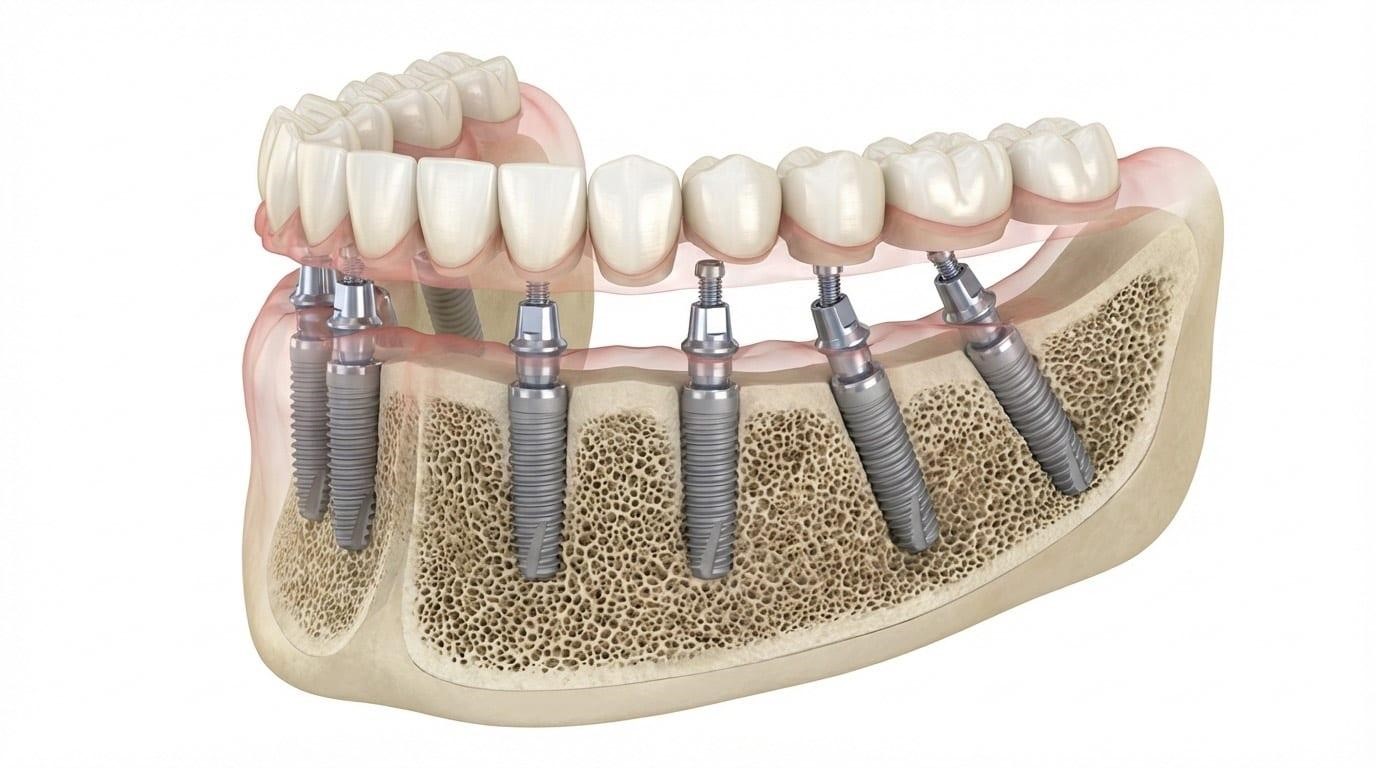
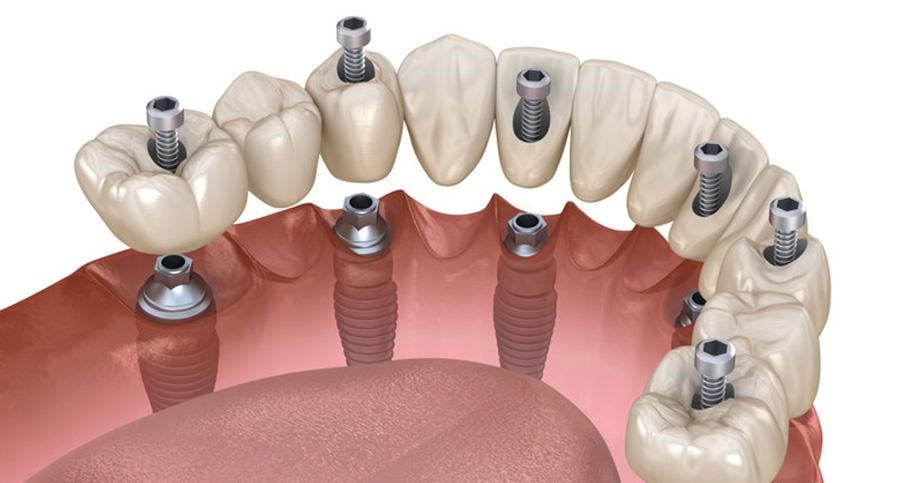
In this treatment, the dentist places six dental implants into the jawbone to support a fixed bridge of replacement teeth. The new teeth remain fixed in place, providing excellent stability while eating, speaking and smiling. Unlike removable dentures, the prosthetic bridge is permanently fixed to the implants and can only be removed by a dentist.
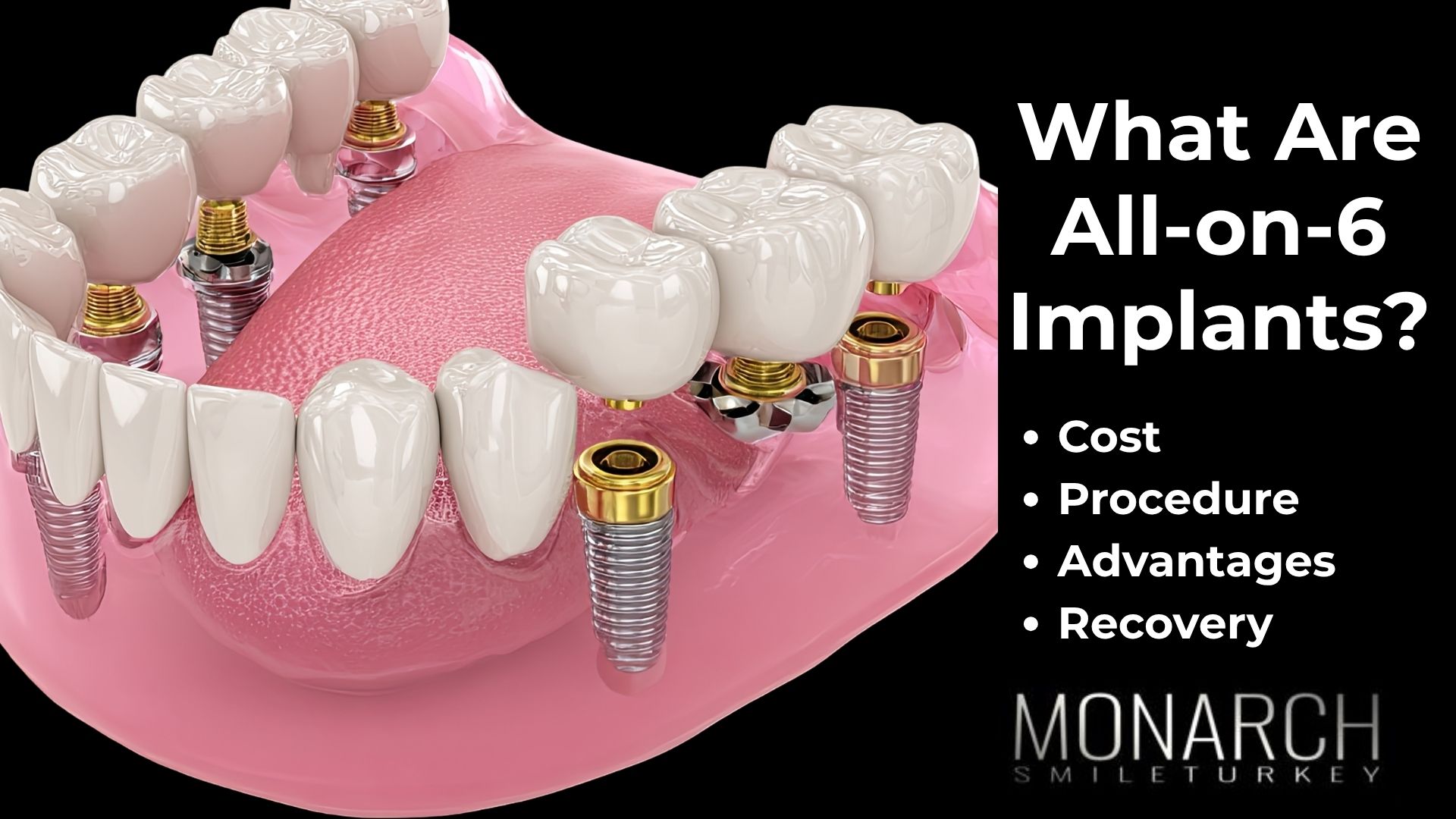
All-on-6 is generally recommended for patients with sufficient jawbone volume to support six implants. The additional implants distribute chewing forces more evenly across the jaw, creating a stronger foundation for the prosthetic bridge and improving long-term stability.
Adequate jawbone volume is essential for successful implant placement. Before treatment, a 3D CBCT scan is used to evaluate the amount and quality of available bone and determine whether All-on-6 is the most suitable treatment option.
All on 6 Dental Implants in Turkey, Antalya
All on 6 dental implants are a very popular procedure in Turkey, especially in Antalya. Many international patients choose Antalya for full-mouth implant treatment because they can receive high-quality dental care while recovering in a comfortable Mediterranean destination.
Antalya has many dental clinics that perform All on 6 treatments regularly. Dentists here are experienced with international patients, so the process is usually planned clearly, from the first scan to the temporary teeth and final restoration.
Another reason patients prefer Turkey is the price. All-on-6 treatments in Antalya are generally more affordable compared to many European countries, while maintaining high standards of care, modern technology and internationally recognised implant systems.
Average Cost of All-on-6 Dental Implants in Turkey, UK, US and Europe
| Region | General price range |
|---|---|
| Turkey | £3,000 - £6,900 per jaw |
| UK | £10,000 - £25,000 per jaw |
| US | £19,800 - £31,600 per jaw |
| Europe | £10,300 - £25,800 per jaw |
Prices are approximate and may vary depending on the implant brand, prosthetic material, bone grafting requirements, and the complexity of each individual case.
Turkey is more affordable for All on 6 dental implants. When performed by an experienced dentist using high-quality implant systems, the standard of treatment can be comparable to that offered in many other countries. Well-known implant brands, modern dental scans, digital smile planning and experienced implant dentists are important steps of quality.
Another advantage is timing. In Turkey, patients usually do not wait for months to start treatment. The consultation, 3D scan, implant surgery and temporary teeth are planned in a much shorter period. This is one reason why many international patients choose Turkey for All on 6 treatments.
All on 6 Advantages
- Six implants distribute chewing forces more evenly across the jaw, creating a stronger foundation for the prosthetic bridge.
- The teeth stay fixed in the mouth, so the patient does not remove them like dentures.
- Chewing is easier because the bridge is supported from more points.
- The bite pressure spreads better across the jaw, not just one small area.
- You feel more secure and comfortable when talking, laughing or eating in public.
- It is a good choice when the patient has enough bone and wants a strong full-jaw treatment.
- The extra implant support helps the final teeth feel more balanced.
- It improves the smile and also supports the lips and lower face better.
- Speech often feels more natural because there is no loose denture moving around in the mouth.
All-on-6 vs Traditional Implants
| Feature | All on 6 | Traditional implants |
|---|---|---|
| Main use | Full jaw restoration | Single tooth gaps |
| Implant number | 6 per jaw | One per tooth |
| Restoration | Fixed full bridge | Separate crowns |
| Surgery plan | One full plan | Tooth-by-tooth plan |
| Bone requirements | Moderate to strong | Depends on each area |
| Treatment time | Usually, faster | Often longer |
| Cost logic | Per full arch | Per implant/crown |
| Best for | Toothless patients | Few missing teeth |
All on 6 is usually chosen when the patient has lost all, or nearly all, teeth in one jaw and wants fixed teeth without replacing every tooth one by one. Traditional dental implants are better when only a few teeth are missing and the other teeth are still healthy. So, the right choice depends on how many teeth are missing, bone condition, bite strength, and the full mouth plan.
How Does the All-on-6 Procedure Work?
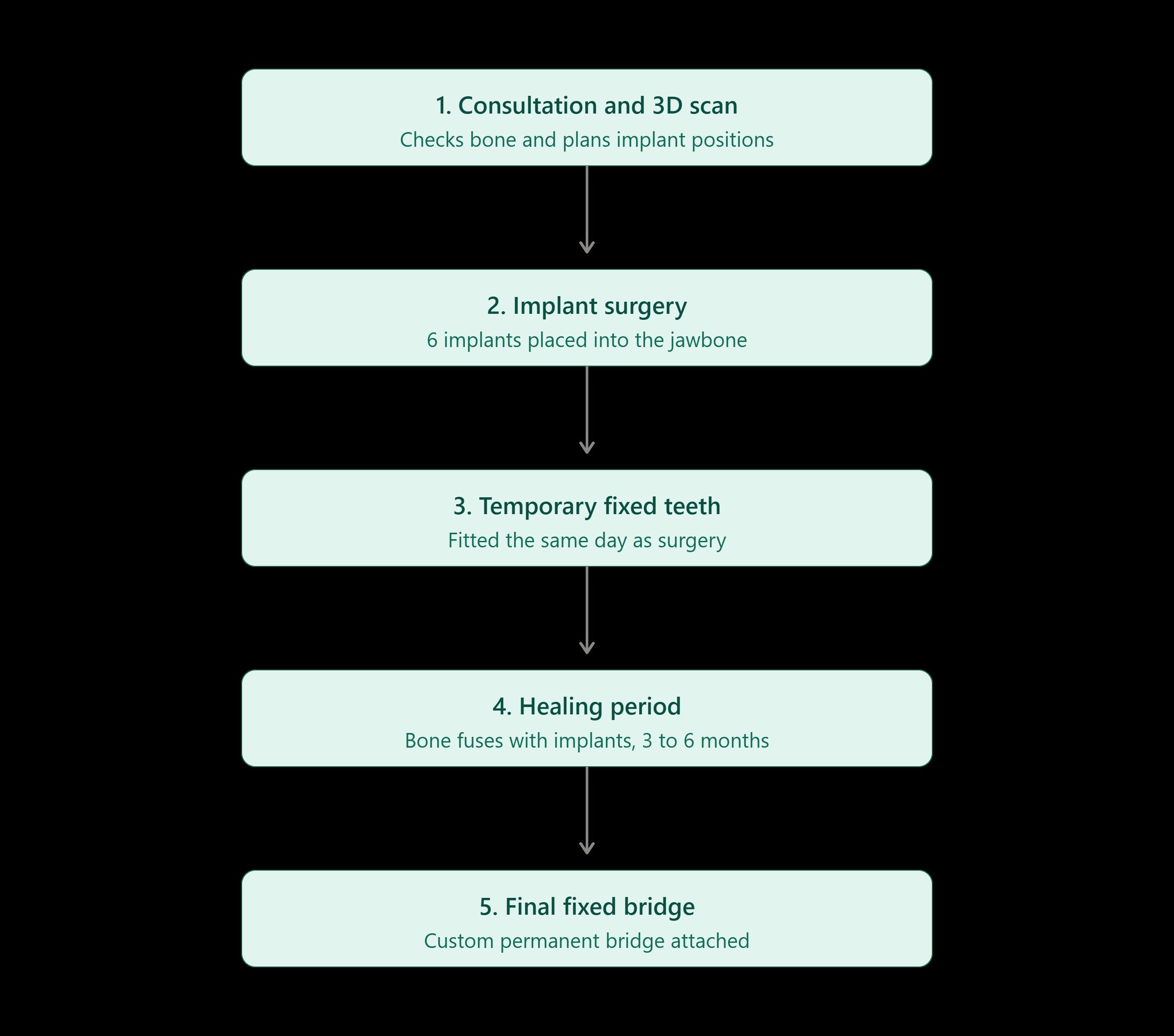
It starts with a detailed 3D CBCT scan that evaluates the available bone and allows precise digital planning of implant placement. During surgery, six titanium implants are inserted into the jawbone. In suitable cases, patients receive a temporary fixed bridge on the same day, allowing them to leave the clinic with functional teeth while the implants heal. After approximately three to six months of osseointegration, the temporary restoration is replaced with the final custom-made bridge.
Who Is Not Suitable for All-on-6?
Not everyone is a good fit right away. If your jawbone is quite thin or weak, it might not hold the implants well, so you'd need bone grafting first or a different approach altogether. Uncontrolled diabetes, heavy smoking, gum disease that hasn't been treated, and some bleeding disorders can also get in the way of healing properly. Age on its own isn't really the issue—it's more about your overall health, how strong your bones are, and habits like smoking that we need to look at closely. That's why the scan and a proper health check always come before we say yes or no.
Recovery After All-on-6 Surgery
Mild swelling, bruising and discomfort are common during the first few days after surgery. A soft-food diet and prescribed pain medication usually help manage these early symptoms. Most people are back to their normal routine within about a week, though we'd still say hold off on the gym and anything too crunchy to eat for a while longer. The swelling usually settles within one to two weeks. It is important to remember what you see on the outside heals fast, while the real work, the bone fusing around the implants, keeps going for months. So sticking to the aftercare instructions really does matter, even after you're feeling fine.
Every patient's healing process is different, and your dentist will provide personalised aftercare instructions based on your oral health and medical history.
How Long Does Healing Take?
There are really two healing clocks running here. Your gums and soft tissue settle down fairly quickly, usually within a week or two. The slower, more important part is osseointegration—that's the bone gradually fusing around each implant—and that takes somewhere between 3 and 6 months, depending on your bone quality and how well you look after things during recovery. We only attach the final, permanent bridge once that fusion is complete, because the implants need to be sufficiently stable before they take on the pressure of everyday chewing.
Is Bone Grafting Needed?
Not always, no. All-on-6 generally requires sufficient bone volume to support six implants. If bone loss is present, bone grafting or a sinus lift may be recommended before treatment. That said, if the scan shows a weak spot, maybe an area that's thinned out after years without a tooth there, we might suggest a small graft or sinus lift just in that area before moving forward. It adds a bit of time to the overall plan, but it's worth it for a foundation that actually lasts.
Can All-on-6 Be Done in One Day?
The surgery part, yes—placing the 6 implants and fitting a temporary bridge can usually be done in a single day, which is why people call it "Teeth in a Day". You won't leave the clinic without teeth. But that temporary set isn't the finish line. The final, permanent bridge only goes on months later, once everything has fully healed and bonded with the bone. So it's a one-day start to a process that plays out over a few months.
All-on-6 vs Dentures
| Feature | All-on-6 Implants | Dentures |
|---|---|---|
| Stability | Anchored into the bone, nothing shifts while eating, talking or laughing | Sit on the gums, supported by the gums and, in some cases, denture adhesive, can slip at the worst moments |
| Daily routine | Fixed in place, no need to remove them at night | Removable, taken out at night |
| Fit over time | Stays secure as it's fixed to the implants | Fit can loosen as jaw shape changes over the years |
| Jawbone health | Stimulates the jawbone like natural roots, keeping it healthier for longer | Does not stimulate the bone; bone loss can even speed up underneath |
They solve the same problem—missing teeth—but they feel completely different in daily life. All-on-6 implants are anchored into the bone, so nothing shifts around when you're eating, talking, or laughing, and you don't take them out at night. Dentures sit on the gums, held by suction or adhesive, and let's be honest, they can slip at the worst moments, especially as your jaw shape changes over the years. There's also a bone health side to this that people don't always think about: implants keep stimulating the jawbone the way natural roots would, so it stays healthier for longer. Dentures don't do that, and in some cases the bone loss actually speeds up underneath them.
All-on-6 vs. All-on-4
Both give you a full, fixed set of teeth, but the difference really comes down to how much bone you're working with. All-on-4 uses just 4 implants, often placed at an angle to make the most of whatever strong bone is available, so it's often the go-to option when there's been noticeable bone loss and grafting isn't ideal. All-on-6 uses two more implants, spreading the bite force more evenly across the jaw, but it generally requires greater bone volume to support six implants. In practice, which one makes sense for you usually comes down to your scan results, your budget, and what your dentist sees as the safer long-term bet.
Success Rate of All-on-6 Implants
Clinical outcomes are generally very positive. Long-term clinical studies report survival rates above 95% over 10 years when All-on-6 implants are properly planned, placed, and maintained. That "right conditions" part matters though: enough healthy bone, an experienced hand doing the surgery, and good materials like titanium all play a role. Long-term success depends on several factors, including good oral hygiene, regular dental check-ups, adequate bone quality, and avoiding smoking.
How to Clean All-on-6 Dental Implants
Cleaning matters more here than people expect, because food can sneak in under the bridge if you're not thorough. Brush twice a day with a soft brush, and really pay attention to where the bridge meets your gums—that's the spot that gets missed. A water flosser or superfloss is worth adding to your routine too, since it reaches under the bridge in a way a normal toothbrush just can't. An antibacterial mouthwash may also help reduce plaque and support gum health. And don't skip the dentist visits—those check-ups catch small issues, like early gum inflammation or a loose part, before they turn into bigger problems.
Regular professional maintenance appointments are recommended every 6–12 months.
Why Choose Turkey for All-on-6 Dental Implants?
A few reasons keep coming up. Clinics in places like Antalya deal with international patients all the time, so the whole journey—scan, surgery, temporary teeth, final bridge—tends to be well organized and clearly explained, without the language barrier getting in the way. Treatment can often begin much sooner than in many other countries, with shorter waiting times for consultation and surgery. And then there's the price—it's genuinely lower, but that's mostly down to cheaper clinic overheads, not corners being cut on quality. Many clinics use the same recognized implant brands and digital planning tools you'd find anywhere else. Many patients also appreciate recovering in Antalya, where the mild climate and relaxed environment can make the healing process more comfortable.
What Is the Best Material for All-on-6 Dental Implants?
When discussing materials for All-on-6 treatment, it is important to distinguish between the dental implants and the fixed bridge they support, as they are made from different materials.
The dental implants themselves are most commonly made from titanium. Titanium is considered the gold standard because it is highly biocompatible and naturally fuses with the jawbone through a process called osseointegration. This creates a strong, stable foundation for the replacement teeth and provides excellent long-term clinical success.
The fixed bridge attached to the implants can be fabricated from different materials depending on the patient's clinical needs, bite force, aesthetic expectations, and budget. Zirconia is one of the most popular choices because it offers exceptional strength, durability, stain resistance, and a natural-looking appearance. Alternatively, some patients may benefit from an acrylic bridge reinforced with a titanium framework, which is lighter in weight and often more cost-effective.
The most suitable combination of implant and bridge materials varies from one patient to another. Your dentist will recommend the best option after evaluating your jawbone quality, oral health, bite, smile design, and treatment goals using a comprehensive clinical examination and 3D digital treatment planning.
What Are the Possible Problems with All-on-6 Dental Implants?
The most common issues are swelling, pain, bruising, bleeding or tenderness in the first few days.
Potential long-term complications include infection around the implants, gum inflammation, loose prosthetic screws, food trapping beneath the bridge and, in rare cases, implant failure.
Smoking, poor cleaning, uncontrolled diabetes, weak bone or putting too much pressure on the implants too early can also slow healing.
All on 6 Dental Implants Reviews
Patient reviews can provide valuable insight into treatment quality, communication, aftercare, and overall satisfaction. Instead of focusing only on star ratings, read detailed reviews describing the entire treatment journey. Before-and-after photos, video testimonials, and independent review platforms can also help you make a more informed decision.
How Many Implants Are Required for a Full Arch?
Most full-arch restorations are supported by four to six implants, depending on the patient's anatomy and treatment goals.
How Long Do All-on-6 Implants Last?
With proper care, All-on-6 dental implants can last 20 years or longer, and the implants themselves may last a lifetime.
FAQs
Which is better: All-on-4 or All-on-6 dental implants?
All on 4 is usually better when the patient has less bone and needs a simpler full-arch treatment with fewer implants.
We can say all on 6 is better when there is enough strong bone, because 6 implants give wider support and a more balanced bite.
What is the All-on-6 technique?
All on 6 technique is a full-arch implant treatment where 6 implants are placed in the jawbone to support a fixed set of new teeth.
Why are dental implants so affordable in Turkey?
Dental implants are more affordable in Turkey mainly because clinic costs, lab fees, rent and general operating expenses are lower than in the UK, US and many European countries.
Is all on 6 dental implants worth it?
Yes, all on 6 dental implants are worth it if the patient wants fixed teeth, stronger chewing, better smile confidence and a more stable option than removable dentures. Although it requires a greater initial investment, many patients consider it worthwhile because it restores comfort, confidence, and everyday function. It can make everyday eating, speaking, and smiling much easier.
Is the All-on-6 procedure painful?
The procedure is performed under local anaesthesia or sedation, so you should not feel pain during surgery. Mild swelling, soreness, and bruising are common afterward, but these symptoms are usually manageable with prescribed medication and improve within a few days.
Can All-on-6 implants be placed in one day?
Yes. In many cases, the implants and a temporary fixed bridge can be placed during the same appointment. However, the permanent bridge is fitted only after the implants have fully fused with the jawbone, which usually takes three to six months.
Who is a good candidate for All-on-6 dental implants?
All-on-6 is generally suitable for people who have lost most or all of their teeth in one jaw and have sufficient jawbone to support six implants. A 3D scan and comprehensive dental examination are necessary to confirm whether the treatment is appropriate.
Why are All-on-6 dental implants more affordable in Turkey?
The lower cost is mainly due to reduced operating expenses, laboratory fees, and general business costs rather than lower treatment quality. Many Turkish clinics use internationally recognised implant brands, digital treatment planning, and experienced implant dentists.
Do All-on-6 dental implants require special cleaning?
Yes. Daily brushing, cleaning beneath the bridge with superfloss or a water flosser, and regular professional dental cleanings are essential. Good oral hygiene helps prevent gum inflammation and supports the long-term success of the implants.
How often should All-on-6 implants be professionally cleaned?
Most dentists recommend a professional cleaning and check-up every 6 months, though some patients with a higher risk of gum issues may be advised to come in more often.
How long does All-on-6 surgery take?
The surgery itself usually takes between 2 and 4 hours, depending on how many implants are placed and whether any extra work, like a small graft, is needed on the day.
Can smokers have All-on-6 dental implants?
Smokers can still get All-on-6 implants, but smoking slows healing and raises the risk of complications or implant failure. Most dentists will strongly recommend cutting down or quitting, at least around the surgery and healing period.
Can I eat normally after All-on-6 treatment?
Not right away. You'll stick to soft foods for the first few weeks while things settle down. As healing progresses and the final bridge is fitted, you can gradually go back to eating pretty much everything you did before.
Is bone grafting always required for All-on-6?
No, not always. Plenty of patients have enough natural bone to skip grafting altogether. It's only needed if the scan shows a weak or thin area that wouldn't hold an implant securely on its own.
What happens if one implant fails?
It's rare, but it can happen. If one implant fails, it's usually removed and, once the area heals, a new one can often be placed. Because the bridge is supported by six implants rather than one, losing a single implant doesn't necessarily mean losing the whole bridge.
What are the disadvantages of All-on-6 implants?
It's a bigger surgery than some alternatives, the cost is higher upfront, and it does require enough healthy bone to begin with. The full process also takes months from start to finish, and like any implant treatment, there's a small risk of infection or implant failure if aftercare isn't followed properly.
What is the success rate of All-on-6 dental implants?
Success rates are generally reported above 95% when the implants are placed by an experienced dentist and the patient has enough healthy bone and follows proper aftercare.
For more detailed information, please contact us or visit us at our dental clinic.