
Worldwide, cosmetic dentistry is no longer seen as a luxury: reports show the global cosmetic dentistry market is worth $30+ billion, and veneers and teeth whitening are two of the most commonly chosen treatments.
Many international patients choose treatments such as porcelain veneers, e-max veneers, and complete smile makeover procedures from experienced cosmetic dentists in Antalya, Turkey.
It’s about understanding what your teeth need and choosing the option that works best for you. Veneers or teeth whitening? Below, we break it down clearly and simply.
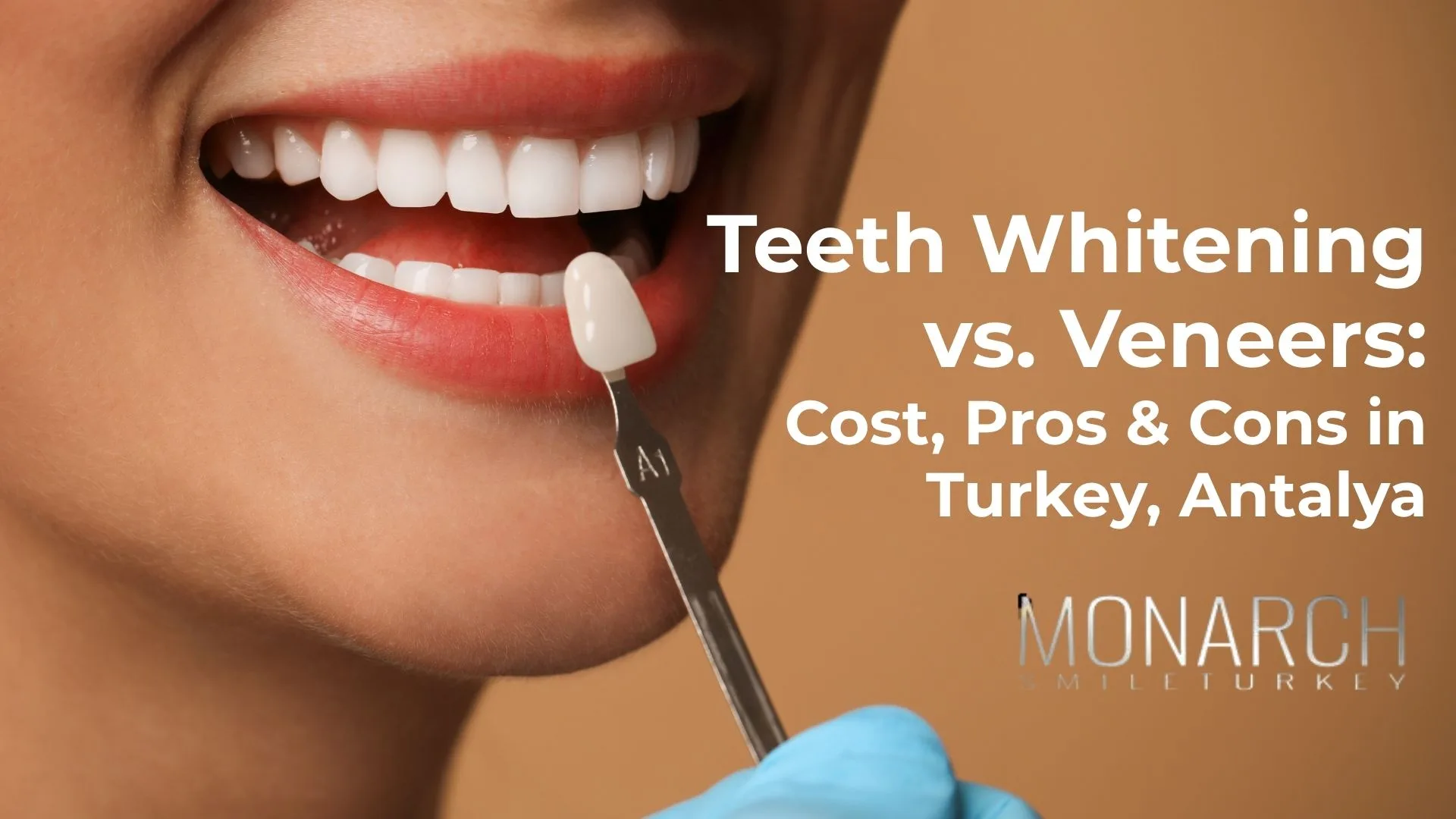
People usually choose laminate veneers or porcelain veneers for solving problems such as chipped teeth, uneven edges, gaps, tooth abrasion, or major discoloration that cannot be completely corrected with teeth whitening. Emax veneers are very popular because of their natural appearance, durability, and high aesthetic quality.
An experienced cosmetic dentist in Antalya can help you decide which option is more suitable depending on your smile goals, tooth condition, and long-term expectations.
What is teeth whitening?
Teeth whitening is basically a treatment that makes your teeth look lighter and brighter by reducing stains and discoloration.
Teeth naturally become darker over time due to coffee, tea, smoking, aging, and dietary habits. Coffee in the morning, tea, smoking, and even age itself… little by little, the color changes, and most people don’t even notice it happening. Teeth whitening is just a way of cleaning out those deeper stains and bringing the teeth back to a fresher, healthier-looking color again.
What are veneers?
Veneers are thin layers that sit on the front of the teeth to improve how the smile looks.
People usually get them for things like stains, small gaps, chipped edges, or teeth that don’t look even. They cover the visible front surface of the teeth and give the smile a cleaner, more balanced look.
Teeth Whitening and Veneers Procedures
The way they’re done is completely different.
Whitening focuses on lifting stains from the natural teeth, while veneers involve reshaping the visible front surface to create a more even and balanced look.
Dental veneers procedure
The veneers process starts with photos, scans, and checking the teeth and gums first. After the smile is planned, a very thin layer is removed from the front of the teeth so the veneers can fit naturally.
Then measurements or digital scans are taken and sent to the lab. You wear temporary veneers while the final ones are being prepared.
At the next visit, the final veneers are tried on first. The color, shape, and bite are checked; small adjustments are made if needed, and then they’re bonded onto the teeth permanently.
Teeth whitening procedure
The appointment usually starts with a quick cleaning.
Then the gums are covered with a protective layer. This part matters because the whitening gel is strong and can cause sensitivity. After the gums are protected, the whitening gel is placed directly onto the teeth.
From there, you just sit back and wait a bit.
Depending on the method, a special light may be used during the session. The whitening gel is the main component responsible for breaking down stains within the enamel. Teeth whitening gel starts breaking down the darker pigments sitting inside the enamel little by little.
After a while, the gel is removed and sometimes reapplied again in the same session to get a better result evenly across the teeth. Then the teeth are cleaned thoroughly, and the final shade is checked together.
What problems can veneers and teeth whitening solve?
Both treatments can improve a smile a lot, but they work on different problems depending on whether the issue is mainly color, shape, or overall tooth appearance.
Problems veneers can solve
- Small gaps between teeth
- Chipped or cracked front teeth
- Uneven tooth shapes
- Worn-down teeth
- Deep stains that whitening can’t remove
- Slightly crooked or uneven-looking teeth
- Teeth that look too small or short
- Old fillings visible on front teeth
Problems teeth whitening can solve
- Yellow-looking teeth
- Coffee and tea stains
- Smoking stains
- Darkening from aging
- Uneven tooth color
- Surface discoloration from food and drinks
- Dull-looking teeth
- Mild staining after orthodontic treatment
Comparing Veneers and Teeth Whitening
Veneers and teeth whitening actually solve different kinds of problems.
Teeth whitening works on the color of natural teeth, while veneers change the shape, size, and overall appearance at the same time. If the issue is only staining, whitening is usually enough… but if there are gaps, chips, or uneven teeth, veneers make more sense.
More detailed comparisons are in the table below.
| Problem | Teeth Whitening | Veneers |
|---|---|---|
| Yellow teeth | ✓ Brightens color | ✓ Covers color |
| Coffee stains | ✓ Removes stains | ✓ Covers stains |
| Smoking stains | ✓ Lightens teeth | ✓ Hides discoloration |
| Small gaps | ✗ Not effective | ✓ Closes gaps |
| Chipped edges | ✗ No change | ✓ Repairs shape |
| Uneven teeth | ✗ No correction | ✓ Improves look |
| Worn teeth | ✗ Cannot fix | ✓ Restores shape |
| Deep discoloration | ✗ Limited effect | ✓ Full coverage |
| Small teeth | ✗ No effect | ✓ Adds volume |
| Slight crookedness | ✗ Minimal change | ✓ Better alignment |
Teeth Whitening vs. Veneers: Pros and Cons
Both treatments have strong sides and a few downsides, so the better option really depends on what your teeth actually need. Whitening is simpler and more conservative, while veneers can solve more cosmetic problems but require a more permanent approach.
Teeth Whitening Pros
- Keeps natural teeth untouched
- Quick treatment process
- More affordable option
- Brightens stained teeth
- No major preparation
- Natural-looking results
- Simple maintenance
- Good for mild discoloration
Teeth Whitening Cons
- Doesn’t change tooth shape
- Cannot close gaps
- Results not permanent
- May cause sensitivity
- Limited effect on deep stains
- Needs touch-ups over time
- Not effective on crowns/veneers
- Results vary by person
Veneers Pros
- Changes shape and color together
- Closes small gaps
- Covers deep discoloration
- Improves chipped teeth
- Creates a more even smile
- Long-lasting results
- Highly aesthetic appearance
Veneers Cons
- Tooth preparation needed
- More expensive treatment
- May need replacement later
- Possible sensitivity at first
- Not ideal for severe grinding
- Repairs can be difficult
- Requires good oral care
Which option is right for you: teeth whitening or veneers?
It depends on what’s bothering you about your smile.
If your teeth are generally healthy and you mostly want them brighter, whitening is usually enough. It’s easier, more conservative, and you keep your natural teeth exactly as they are.
Sometimes people think they need a full smile makeover, but only after teeth whitening alone, and they’re already happy with the result.
But when the issue is more than color, like gaps, uneven edges, small teeth, chips, or old discoloration that doesn’t really lift anymore… then veneers make more sense for you.
Comparing Cost of Veneer and Teeth Whitening
Whitening is definitely a more affordable option. Teeth whitening is essentially a single treatment that focuses solely on improving tooth color. Veneers involve planning the smile, preparing the teeth, lab production, fittings, little adjustments… there’s just a lot more work behind it.
In Turkey, most professional whitening treatments are somewhere around $150–400, depending on the clinic and the system being used.
Veneers are a different story because they’re made individually for each tooth. Usually you’re looking at around $200–700 per tooth, or more with premium materials like Emax.
How long do veneer and teeth whitening last?
Whitening usually lasts anywhere from several months to around 2–3 years. Porcelain veneers commonly last 10–15 years with proper care and regular dental check-ups.
The big difference is this: whitening fades over time because natural teeth stain again, but veneers are much more stable since the material itself doesn’t discolor the same way natural enamel does.
Are veneers better than teeth whitening?
No… not automatically. If the only issue is tooth color, whitening is usually the healthier and simpler option. Because you keep your natural teeth completely untouched.
Porcelain veneers are often a more suitable option for patients with gaps, chips, uneven tooth shapes, or deep discoloration.
Veneers Before and After in Turkey, Antalya
Frequently Asked Questions
Is teeth whitening better than veneers?
No… it completely depends on what you’re trying to fix. If the problem is mainly staining, whitening is usually enough, but if there are gaps, chips, uneven teeth, or shape issues, veneers make much more sense.
Do teeth go yellow under veneers?
Yes, natural teeth under veneers can still change color over time. However, veneers themselves are highly stain-resistant, so discoloration is usually only noticeable near the edges or exposed tooth areas. Veneers themselves do not stain as easily as natural enamel. But the yellowing becomes noticeable only around the edges or exposed areas if oral care, smoking, or heavy staining habits continue for years.
Do veneers stay white forever?
No, veneers are very stain-resistant but not completely immune to aging, smoking, or long-term wear over many years.
How to whiten veneers naturally?
Veneers themselves don’t really whiten naturally like real teeth. So, the best thing you can do is keep them polished and stain-free with regular cleaning, good brushing habits, and limiting things like smoking, coffee, and red wine over time.
Why do people get veneers instead of whitening?
Because whitening only changes the color… it doesn’t fix the shape, gaps, chipped edges, uneven teeth, or old discoloration that sits deep inside the tooth.
So, when someone wants a bigger overall change, not just whiter teeth but a more balanced and aesthetic smile, veneers usually become the better option.
Should you get teeth whitened before veneers?
Yes, in many cases it’s a good idea because veneers are color-matched to your existing teeth and whitening first helps create a brighter base shade.
For more detailed information, please contact us or visit us at our dental clinic.